The question of trends for the offices of the future comes back every year with the same list of promises: well-being, flexibility, technology. The problem is that those words do not help anyone decide. What actually structures offices over the coming years comes down to four measurable elements: contracting floor space, a now-stable remote work rhythm, dated energy regulation, and a rental model shifting towards service. Here is what each of them means concretely, looking to 2030 and beyond.
Fewer square meters, better used
The most visible movement is not aesthetic, it is accounting. Moving to flex office generally translates into handing back 20 to 40% of occupied space, and that reduction is not recovered afterwards. The Paris region market bears the mark of it: take-up in the first half of 2026 stood at around 750,000 sq m, down 5% year on year and, more tellingly, 18% below the five-year average.
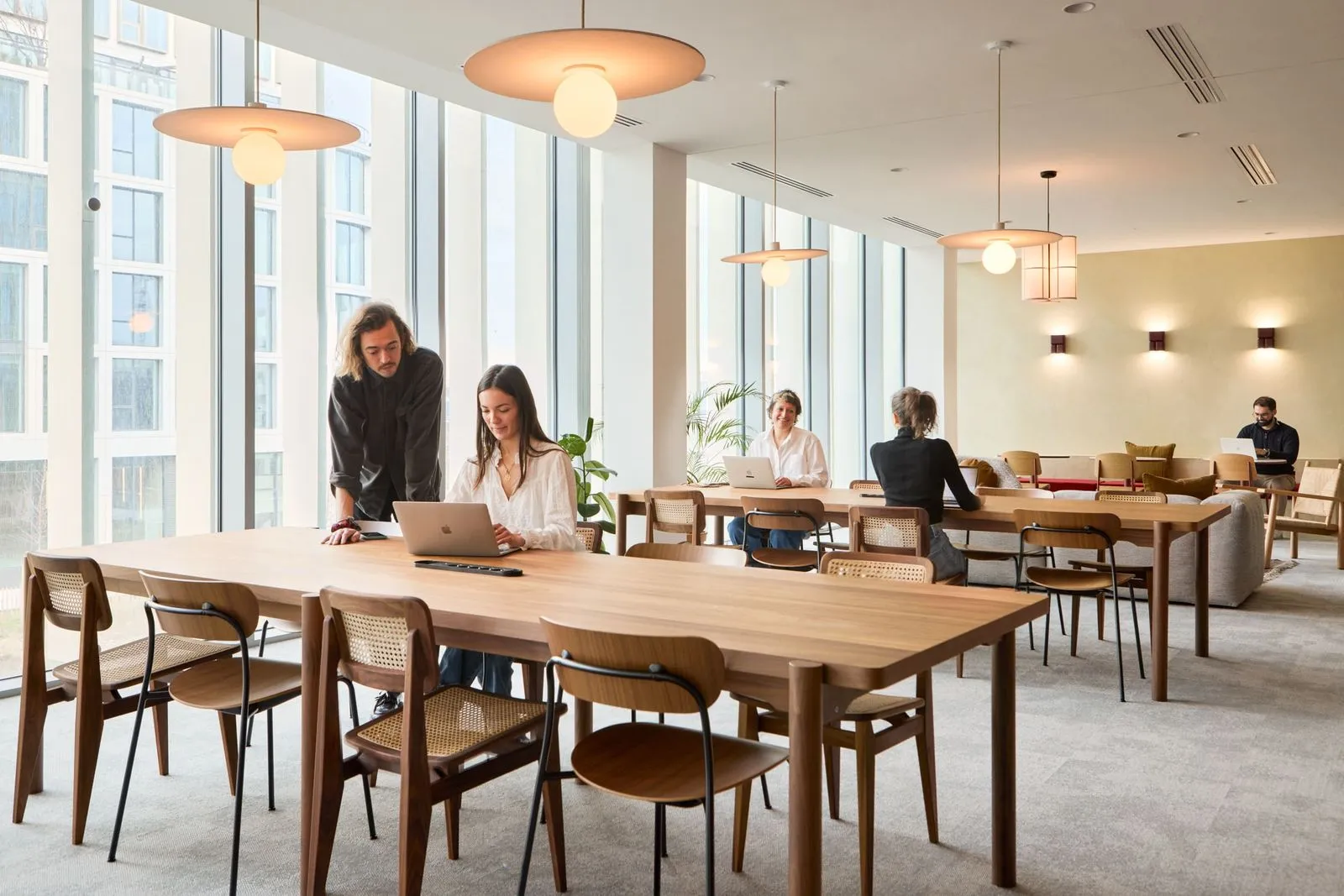
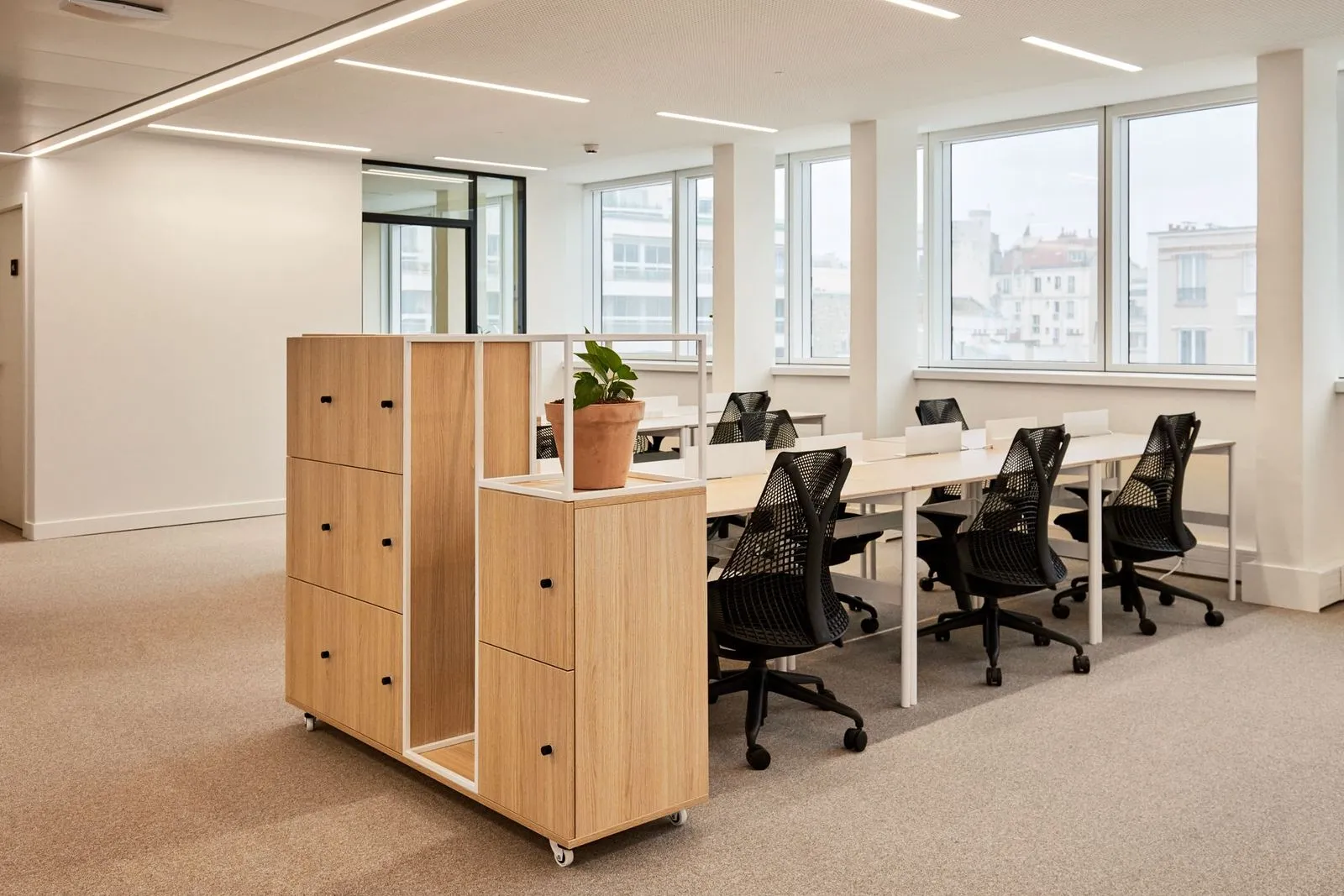
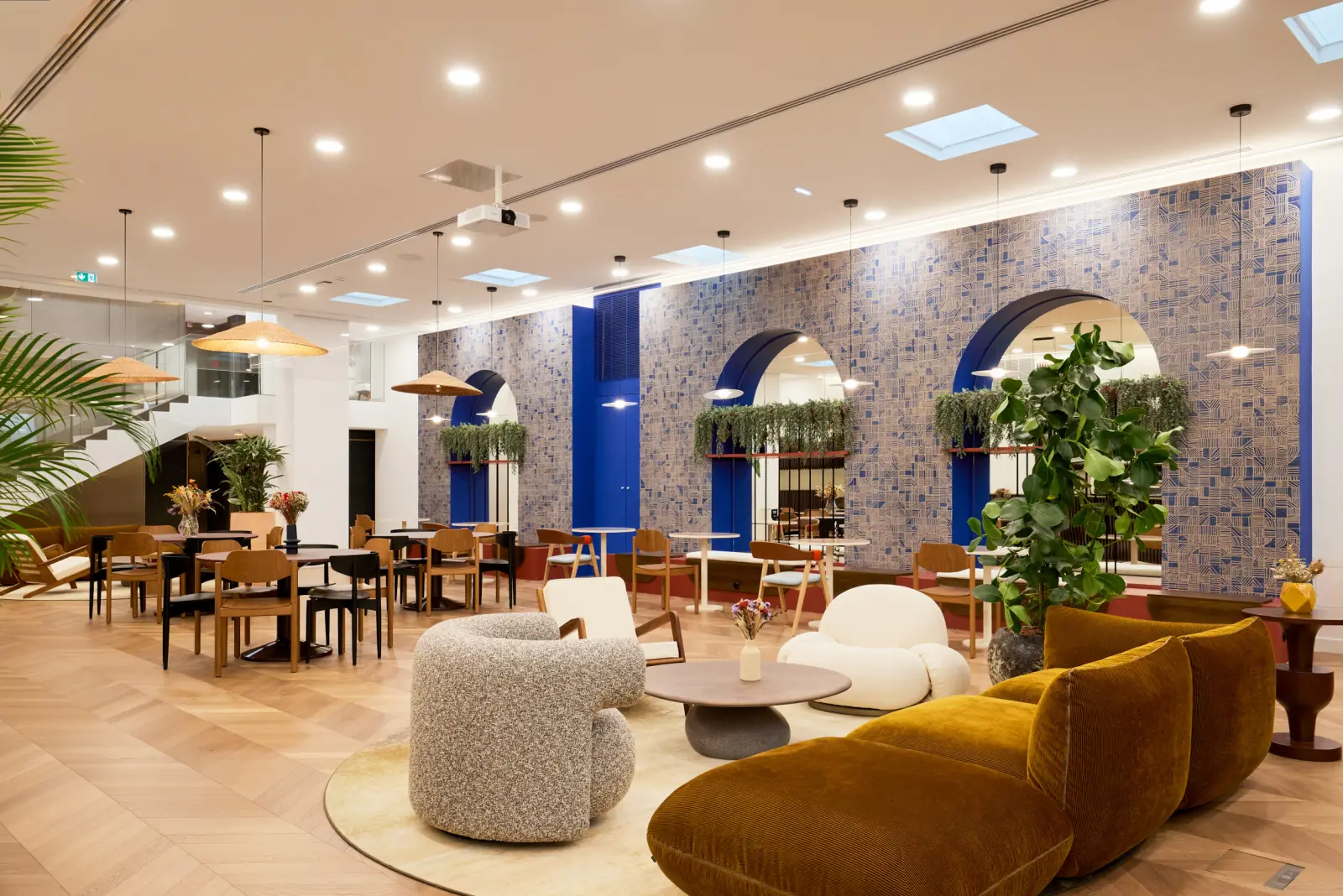
This contraction does not mean companies are doing without offices. It means they take less of them, and fill them differently. The number of individual seated desks falls, while the share of collective space rises: enclosed rooms, phone booths, informal work areas. Flex office is no longer an experiment to run but the starting point of the layout plan, with a common ratio of 0.7 desks per person.
Remote work no longer moves, it sizes
The good news for real estate teams is that remote work has left its unstable phase. The average pace has settled at around 1.9 days a week, down from 2.7 days in 2021. Around 22% of private-sector employees work remotely at least once a month, and nearly three managers in four do so at least half a day a week.
This plateau changes the nature of the exercise. As long as the rhythm kept moving, sizing meant betting. Today, it means applying a known figure. The practical consequence is clear: attendance concentrates on Tuesday, Wednesday and Thursday, which requires sizing on midweek peaks rather than on the weekly average. A floor calibrated on the average saturates three days out of five and sits empty the other two.
Energy performance becomes a dated constraint
This is the difference between a trend and a deadline. France’s tertiary decree, issued as decree no. 2019-771 of 23 July 2019, requires tertiary buildings over 1,000 sq m to cut their final energy consumption by 40% by 2030, 50% by 2040 and 60% by 2050 against a reference year. Non-compliance exposes owners to penalties of up to 7,500 euros per building, together with publication of the breach.
For a tenant company, this moves the subject from CSR messaging to lease negotiation. Two questions become structural before signing: which reference year has been declared for the building, and what works trajectory the landlord plans in order to meet the 2030 deadline. The answer drives the level of service charges for the whole occupancy period, and often weighs more than a few euros of difference on rent per square meter.
| Trend | What changes concretely | Deadline |
|---|---|---|
| Shrinking floor space | 20 to 40% of sq m handed back when moving to flex office | Ongoing, at each lease renewal |
| Stabilized remote work | Sizing on Tuesday-to-Thursday peaks | Already in place |
| Tertiary decree | -40% consumption on buildings over 1,000 sq m | 2030, then 2040 and 2050 |
| Acoustic and lighting comfort | A design item, no longer a finishing touch | Gradual, driven by hybrid meetings |
| Office as a service | Short commitments, all-inclusive price per desk | Already dominant on small and medium surfaces |
Indicative benchmarks, to be adjusted according to the size of the organization and the type of lease.
Comfort becomes a design criterion, not an extra
For a long time, acoustics and lighting were handled at the end of the build, with whatever budget remained. Today they move up into the design phase, for a simple reason: they determine whether teams show up or not. An IFOP survey conducted for Sonos shows that 71% of people working in open environments consider noise disrupts their concentration. That is, very concretely, the first reason given for staying home.
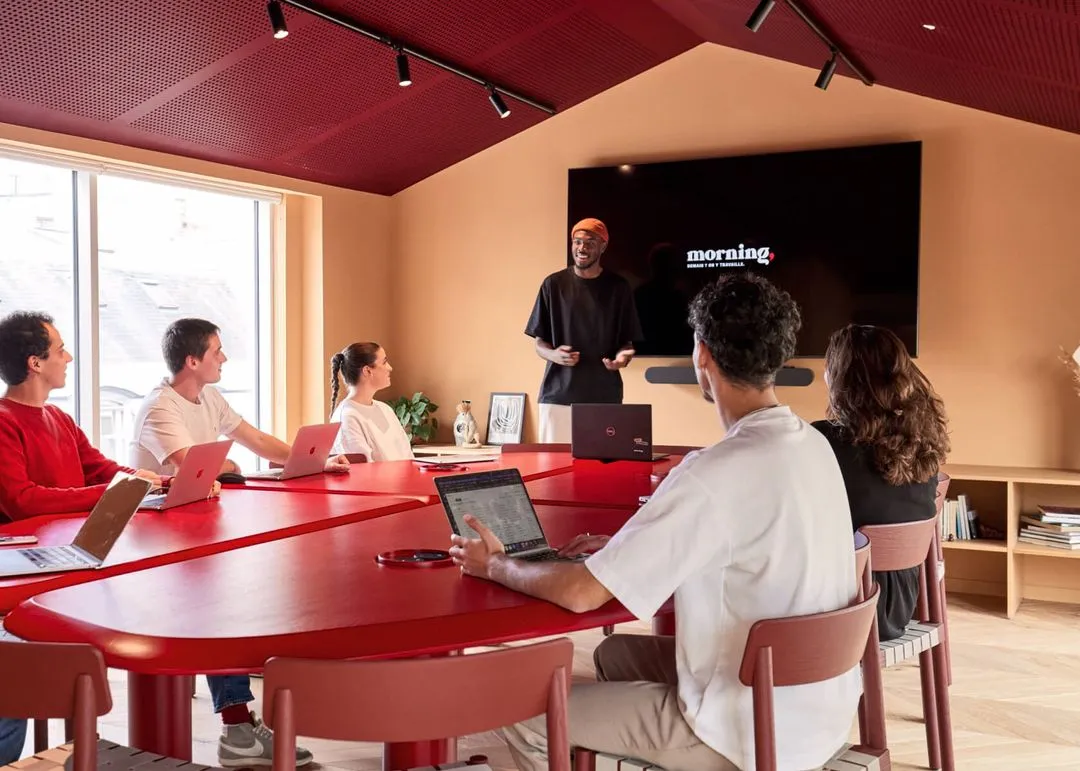
The issue is amplified by the spread of hybrid meetings, half in-person and half remote. An acoustic flaw that went unnoticed in a fully in-room meeting becomes audible from the first video call. This explains why meeting room design now includes costed acoustic treatment from the outline stage, and why the trade-off between private office and open space is increasingly settled on concentration criteria rather than status.
A workspace is now judged on its ability to host focused work, not only collaboration. It is the clearest reversal of the decade: full open space was designed to circulate information, whereas the reason to come to the office has become the need to concentrate somewhere other than home.

Offices are increasingly rented as a service
The last shift concerns the contract rather than the building. The classic nine-year French commercial lease assumes a visibility that few organizations still have on their headcount three years out. Short-commitment formats, with a price per desk including charges, cleaning, reception and connectivity, answer that uncertainty. They allow floor space to be adjusted at twelve or twenty-four months instead of carrying a long commitment based on an assumption.
This shift also explains the growing readability of prices. A coworking price per desk in Paris can be compared directly from one operator to another, whereas a classic lease requires reconstructing rent, charges, taxes, works and services to obtain a full cost. To check sizing before comparing, Morning’s desk calculator gives a first estimate, and the office rental offers help set a realistic budget in Paris.
What will not change
It is also worth knowing what holds. Centrality remains the most discriminating criterion in the Paris region market: vacancy stood at around 11.4% across Île-de-France at the end of March 2026, but remains close to 8% within Paris proper and exceeds 20% in some inner-suburb submarkets. In other words, companies take less space, but they still take it where teams can get to it easily. Choosing the district therefore remains the most structuring decision, even before choosing the format.
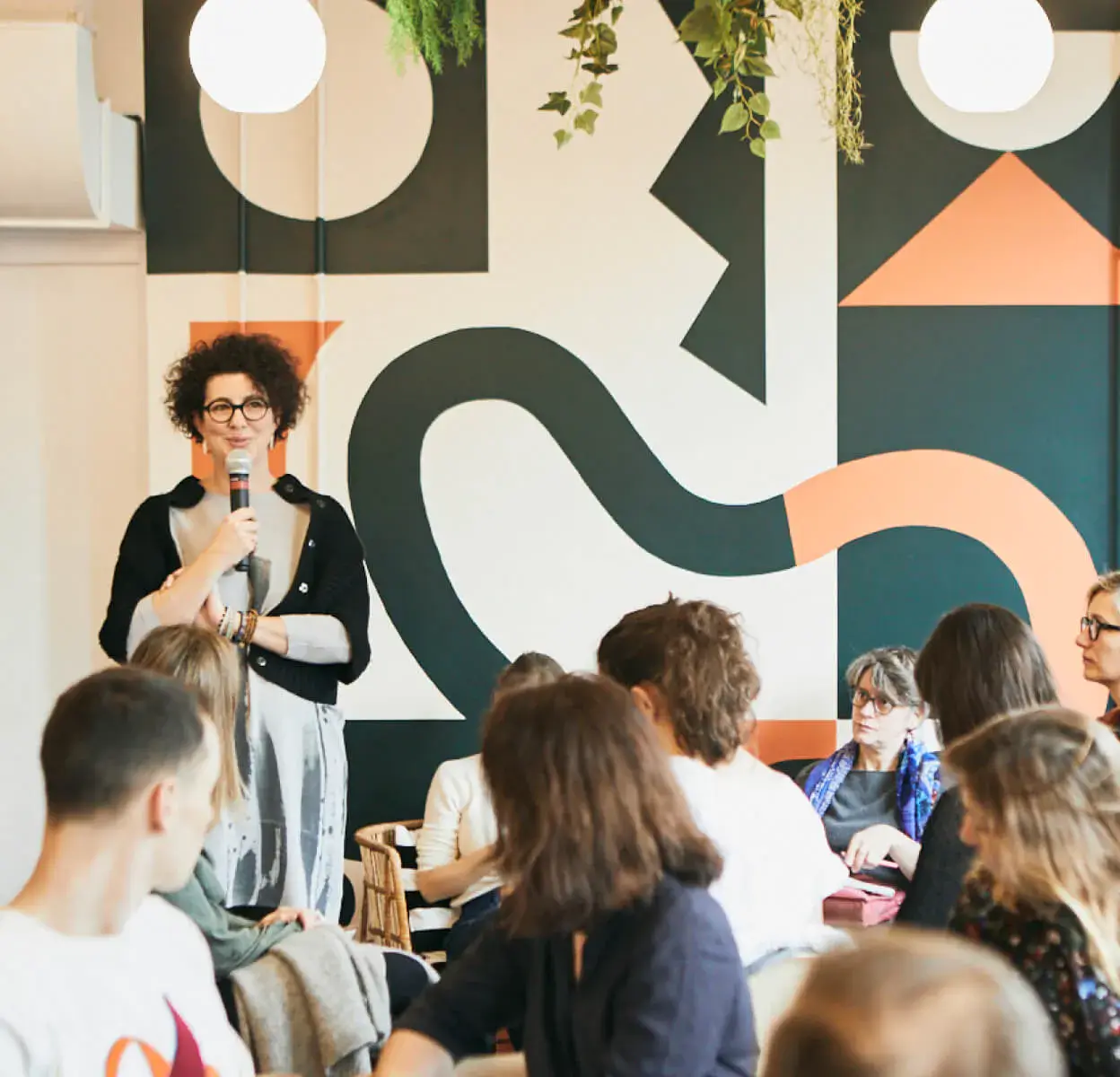
The second constant is the social function of the place. None of the trends listed here replaces the reason teams travel in: meeting, learning by imitation, settling in ten minutes what would take three written exchanges. The offices of the future will be smaller, better insulated, better sized and more flexible contractually. They will continue to serve exactly the same purpose. For the short term, the 2026 office design trends detail what is already playing out this year.