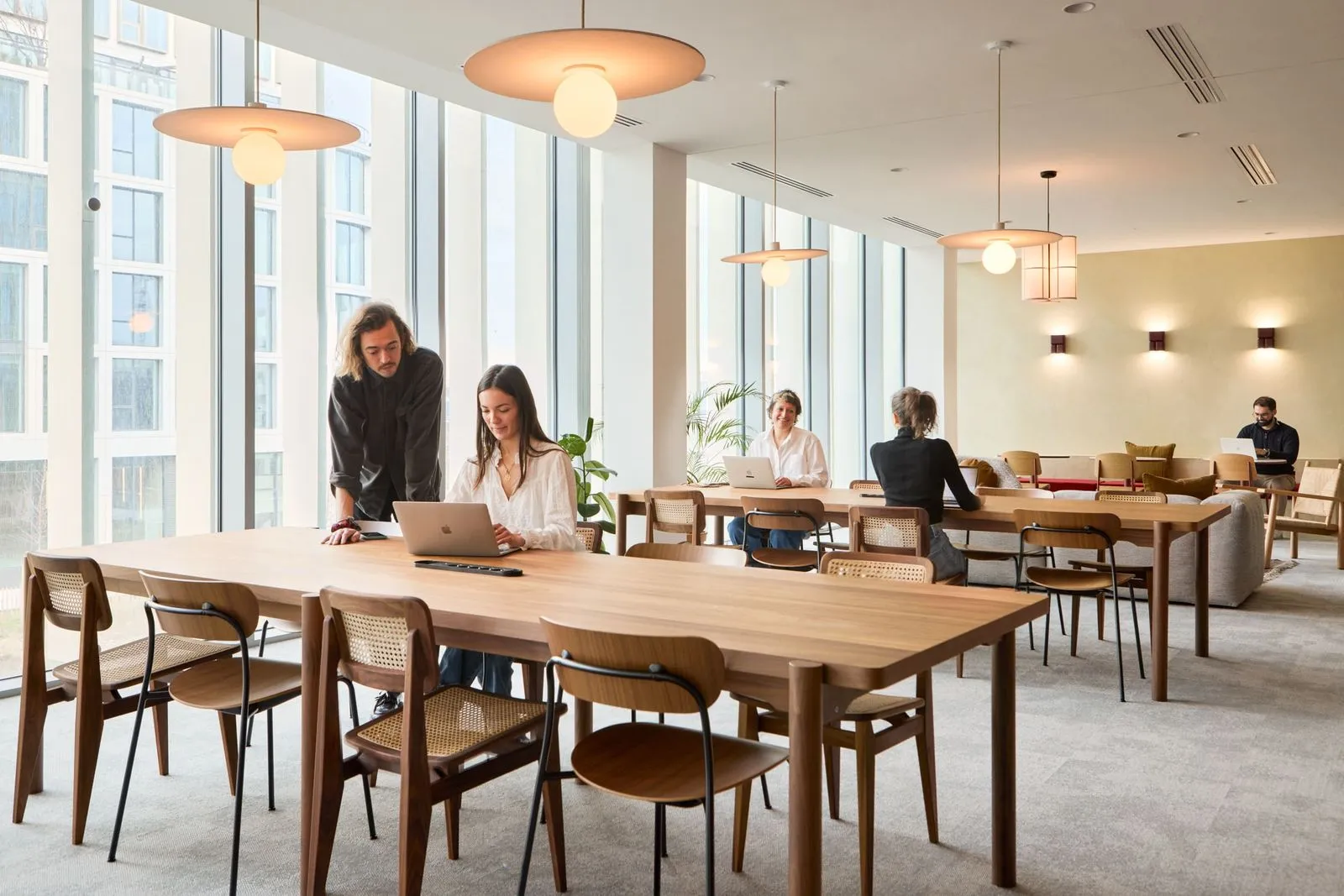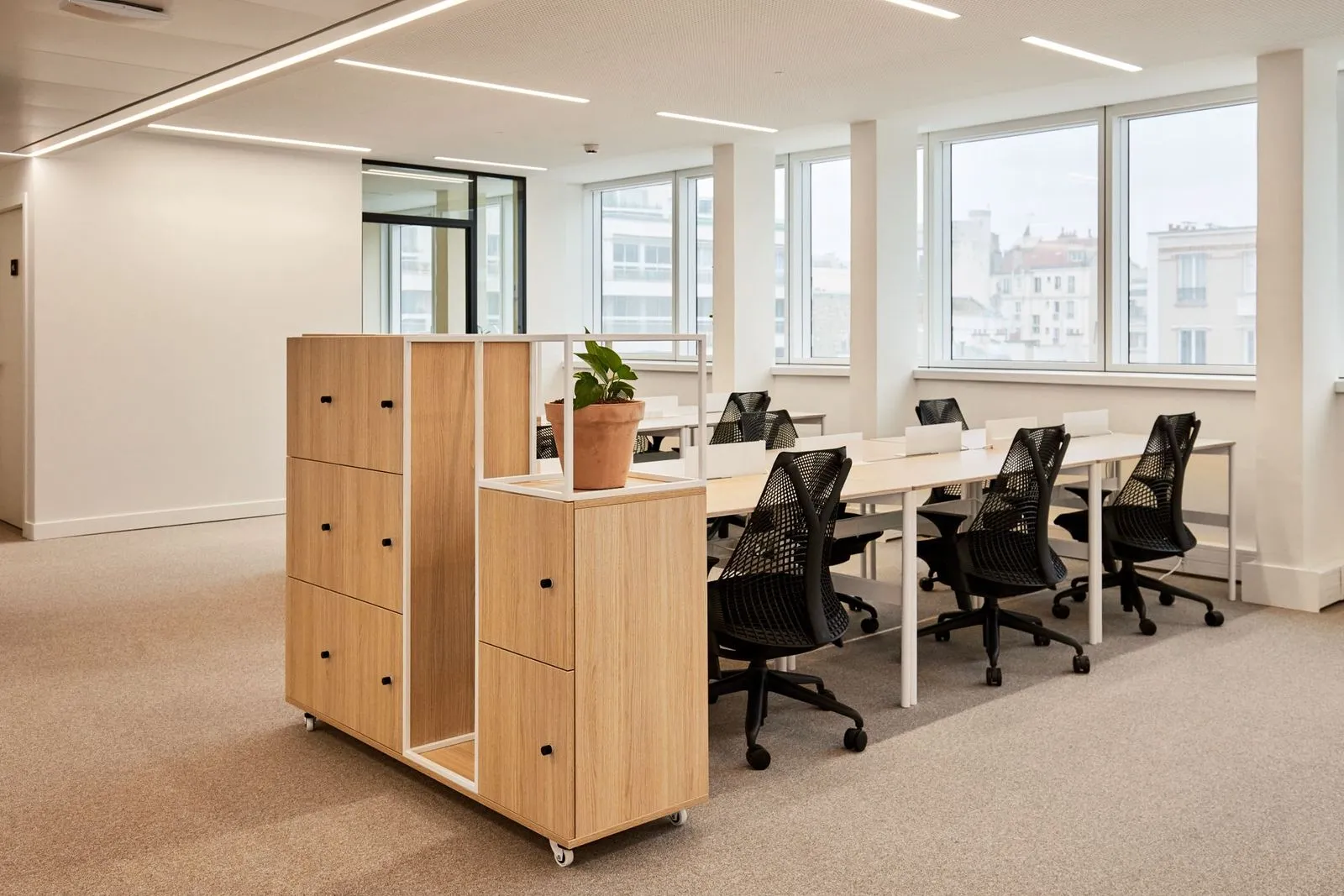
Flex office entered the vocabulary of property directors well before it was understood. Presented sometimes as a saving on floor area, sometimes as a modernisation of working habits, it regularly fails for one simple reason: companies cut the number of desks without reinvesting in what makes the model liveable.
What is actually being discussed
Flex office rests on a single idea: the workstation no longer belongs to a person but to the group. Everyone settles wherever they like on arrival, puts their belongings in a locker when leaving, and finds a clean desk somewhere else the next day.
That shift has a mechanical consequence: since nobody has a reserved desk, there is no point in planning one per employee. The floor is then sized on observed attendance rather than on contractual headcount.
Two misreadings are common. The first is confusing flex office with remote work: these are two distinct subjects, even if the second makes the first possible. The second is seeing it as a simple floor area reduction exercise, which leads to removing desks without creating the spaces that absorb the new usage patterns.
Calibrating the number of desks
Sizing is calculated from real attendance, measured over at least four weeks. The formula is direct: the number of desks equals the observed attendance peak, plus a safety margin of 10 %.
| Average attendance | Recommended desk ratio | Room for manoeuvre |
|---|---|---|
| 5 days a week | 0.95 to 1 | Almost none |
| 4 days a week | 0.85 | Limited |
| 3 days a week | 0.7 | Comfortable |
| 2 days a week | 0.6 | Comfortable with active management |
Indicative ratios, to be adjusted according to how volatile attendance is and to the seasonality of the business.
The classic trap is using the average instead of the peak. A team present three days a week on average can hit 90 % attendance on a Tuesday in September. If the floor is calibrated on the average, that Tuesday becomes unmanageable, and the model loses credibility with the team in its first week.
The spaces that make or break the project
This is where success is decided. Removing 30 % of desks frees up floor area, and that area has to be reallocated, not reclaimed.
Phone booths. With no assigned desk, nobody can take a sensitive call from their seat. Plan for at least one booth per eight to ten people present, more if the activity is phone-heavy.
Focus zones. A quiet area, with an explicit silence rule, absorbs the long tasks that become impossible on an open and constantly moving floor.
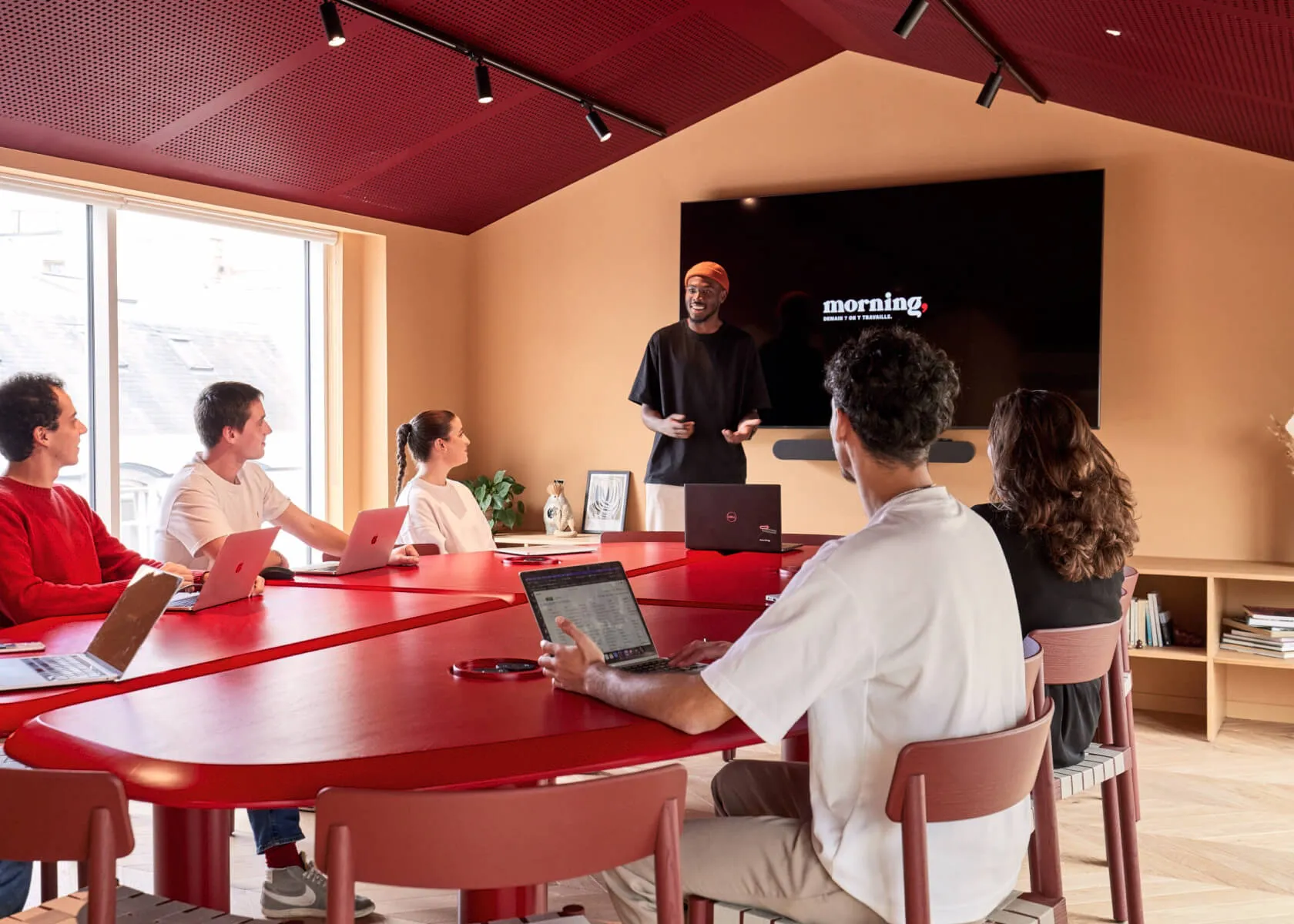
Small meeting rooms. Meetings with two or three people, previously held at the desk, migrate to rooms. Demand for small rooms rises sharply, often beyond forecasts.
Lockers. One closed locker per person, sized for a laptop, a headset and personal effects. It is the most immediate friction point when it is neglected.
Collective storage. Supplies, cables and shared documents need an identified home, otherwise they clutter desks and break the clear desk rule.
Flex office projects that fail did not remove too many desks, they forgot to create the spaces that make those desks interchangeable. The number of phone booths predicts success better than the desk ratio does.

The rules to set before day one
Flex office is an organisation, and therefore a matter of written rules. Four points have to be settled before the move.
- The clear desk rule. A vacated desk is an empty desk, no exceptions. Without it, informal assignment reappears within days.
- Attendance visibility. A shared calendar or a booking tool lets everyone know who will be there. That is what prevents coming to the office to work alone.
- Team days. Setting one collective day per team gives the journey a purpose and smooths attendance if days are spread across teams.
- Acknowledged exceptions. Some desks stay assigned, for equipment or physical constraints. Those exceptions have to be explicit and justified, otherwise they become a fairness issue.
The impact on choosing a space
Flex office changes the selection criteria for a venue. A flex floor needs less desk area but more support volume, better acoustic performance and a higher-than-standard meeting room ratio.
In concrete terms, a flexible space well equipped with booths and small rooms beats a larger but bare floor. This logic also shifts the trade-off between occupancy formats: the subject is covered in our comparison between private office and open space .
On the budget side, reducing floor area often makes it possible to keep a central address at constant cost, which moves the debate onto location. The gaps between districts are detailed in our article on where to locate your offices in Paris , and the price ranges in the one dedicated to coworking prices in Paris .
The five most expensive mistakes
- Announcing the ratio before measuring attendance. The team hears a desk cut, not an organisation project.
- Calibrating on the average rather than the peak. Saturation on busy days destroys trust in the model.
- Undersizing phone booths. It is the number one objection raised by teams.
- Neglecting acoustics. A flex floor moves more, and is therefore noisier than an assigned floor at equal density.
- Letting managers keep an assigned desk. Nothing discredits the project faster.
A successful flex office goes unnoticed: people find a seat, take their calls without disturbing anyone, and put their things away without thinking about it. That outcome does not come from the number of desks retained but from the quality of everything surrounding them.