
CSR team building combines team cohesion with a charitable, environmental or solidarity-based action, rather than plain collective entertainment. This format is gaining ground in corporate seminars, driven by the wish to give concrete substance to the social responsibility commitments companies already communicate on, without sacrificing the social moment expected from a team event.
Comparing CSR team building formats
| Format | Participants | Duration | Level of involvement | Main CSR objective |
|---|---|---|---|---|
| Solidarity-based creative workshop | 8 to 60 | Half a day | Accessible to all | Upcycling, repair, circular economy |
| Charitable fieldwork | 10 to 100 | Half a day to a full day | Moderate | Solidarity, link with a charity |
| Environmental awareness session | 10 to 150 | 2 to 4 hours | Accessible to all | Education, understanding climate issues |
| Collaborative outdoor clean-up | 8 to 80 | Half a day | Moderate | Preserving the urban or natural setting |
| Shared garden and sufficiency | 6 to 40 | Half a day | Accessible to all | Biodiversity, zero-waste awareness |
This comparison gives an order of magnitude: duration and headcount vary depending on the partner organisation and the venue chosen.
What is CSR team building?
CSR team building is a team cohesion activity built around a charitable, environmental or solidarity-based action, aimed at shared meaning rather than entertainment alone. It differs from classic team building through this dual purpose: strengthening bonds between colleagues while giving a concrete translation to the corporate social responsibility commitments the company communicates on elsewhere.
The format suits a small team as well as a large group, provided the chosen action is adapted to headcount: an indoor solidarity workshop easily accommodates several dozen people in sub-groups, while fieldwork often requires finer logistics beyond a hundred participants.
This format also differs by the level of involvement required: an awareness talk stays passive and suits a large headcount, while a repair workshop or fieldwork collection actively engages every participant and builds closer bonds between colleagues.
Why organise CSR team building in a company?
Giving the day concrete meaning remains the primary goal. A shared charitable or environmental action creates common memories while avoiding the pitfall of an event perceived as mere leisure disconnected from the company’s everyday business, especially among employees most attuned to societal issues.
CSR team building also has a direct effect on employer branding: it makes visible and concrete commitments that often stay abstract in a charter or an annual report. For a company that already communicates on its social responsibility policy, involving part of its team in a tangible action strengthens the consistency between words and practice, a point of growing attention for both employees and candidates.
The format finally makes internal communication easier between colleagues who do not necessarily cross paths on the org chart: a senior executive and a new joiner find themselves on equal footing around a repair workshop or fieldwork collection. This mix works particularly well for a company looking to anchor its CSR approach beyond a dedicated department, by directly involving operational teams.
What activities to suggest for CSR team building
The choice of activity depends on the company’s actual CSR commitments, the time available and the headcount to mobilise. The most unifying formats stay accessible to all, with more engaging variants for willing teams.
The solidarity-based creative workshop engages participants around a useful output: textile upcycling, repairing bikes destined for a charity, or assembling hygiene or school kits. The format values manual skill as much as cooperation, and the day’s concrete outcome, repaired items or assembled kits, leaves a tangible trace of the action.
Charitable fieldwork engages the team in a direct solidarity action: food collection or outreach for the benefit of a local charity. This format requires coordination with a partner organisation recognised for the chosen action, and suits teams looking for immediate social impact rather than a material output.
Environmental awareness, in the form of a talk or a climate-fresco-style workshop, remains the most accessible format for a large headcount, including teams spread across several sites. It is particularly suited to opening a nascent CSR approach, before moving on to more engaging actions in following years.
Collaborative outdoor clean-ups, such as collecting litter in a park or along a waterway, combine light physical effort with visible environmental impact, a format that works well as a half-day outdoors between April and October.
Shared gardens and zero-waste workshops offer a gentler approach, centred on raising awareness of urban biodiversity and waste reduction, a useful format for a team discovering the CSR approach or looking for a less physical moment than the other formats.
How to organise CSR team building, step by step
1. Define the CSR pillar targeted. Social, environmental or charitable: the pillar chosen directly guides the choice of format and of the partner organisation to involve.
2. Choose an action genuinely aligned with the company’s commitments. An action disconnected from the CSR commitments communicated elsewhere risks being perceived as window dressing rather than genuine commitment; a modest but consistent action is preferable to a spectacular one with no link to existing CSR policy.
3. Work with a recognised partner organisation. A charity, a social and solidarity economy structure or a specialised body depending on the chosen action: the partner brings the expertise and logistics specific to that action, and ensures the announced impact is real.
4. Set the duration and headcount. Half a day suits most solidarity workshops and awareness sessions, a full day suits fieldwork involving travel. The number of participants then determines the number of sub-groups and facilitators needed.
5. Measure the impact after the event. A report quantifying the action, kilograms collected, kits assembled, volunteering hours, gives concrete substance to the company’s CSR message and makes it easier to highlight internally and in the company’s communications.
The season also influences the choice of format: outdoor fieldwork is easier to plan between April and October, while an indoor solidarity workshop or an awareness talk remains workable all year round. Planning an indoor backup activity for an outdoor action avoids cancelling a long-planned event due to bad weather.
Where to organise CSR team building in Paris
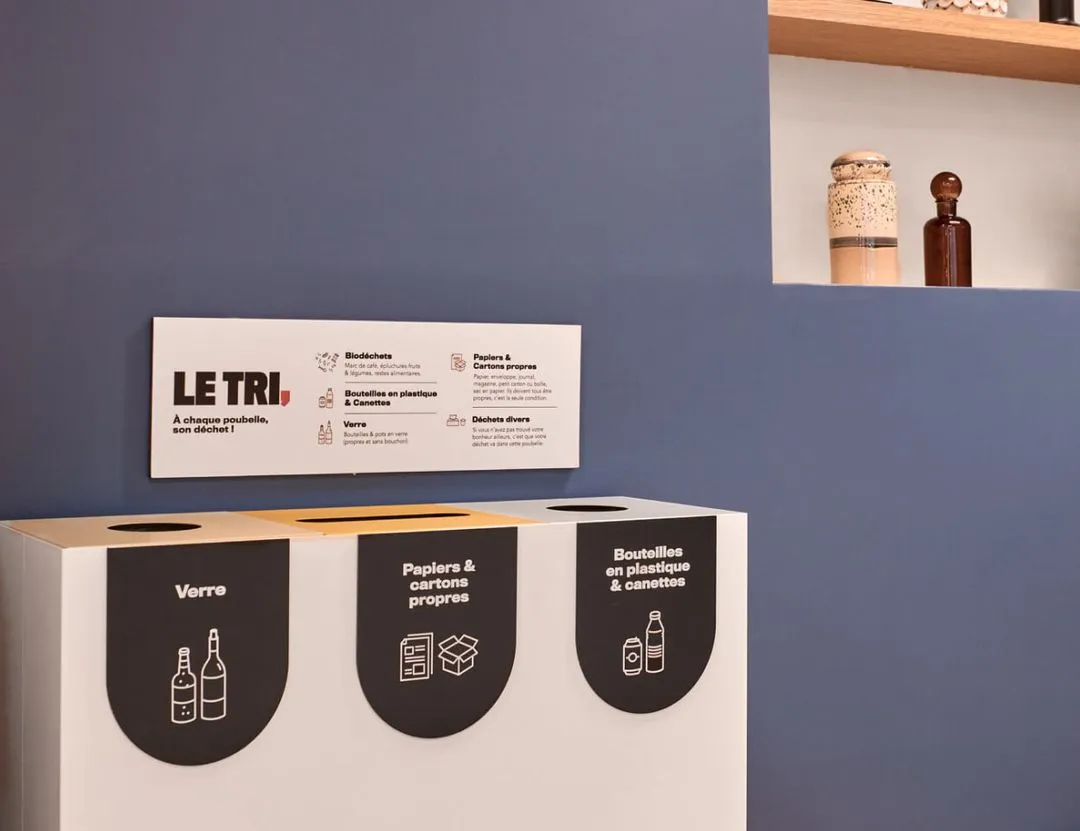
The choice of venue shapes a good part of the logistics: a modular space to host a solidarity workshop, a briefing room to present the action and its goals, easy access for a charity partner or for collecting equipment. A venue that already showcases its own CSR approach, for instance through a visible recycling sorting point or an energy sufficiency policy, also anchors the event’s message in a consistent setting.
Morning offers several Paris addresses dedicated to corporate events, with modular spaces suited to solidarity workshops as well as to more classic awareness formats. For a budget estimate, the guide to team building budget breaks down spending by format and headcount. To find more activity ideas, including indoors, the article on team building games complements this guide, as does the more physical sports team building format. And to compare venue rental options, the guide to hiring a venue for a seminar details the criteria to check before booking.