Coworking in Paris does not have one price, it has several. Between a shared desk in the 19th and a closed office a short walk from the Arc de Triomphe, the ratio is regularly one to two, for a service that looks broadly similar from one space to the next. Understanding what makes up the invoice avoids comparing offers that, in practice, are not comparable at all.
What a desk rate really covers
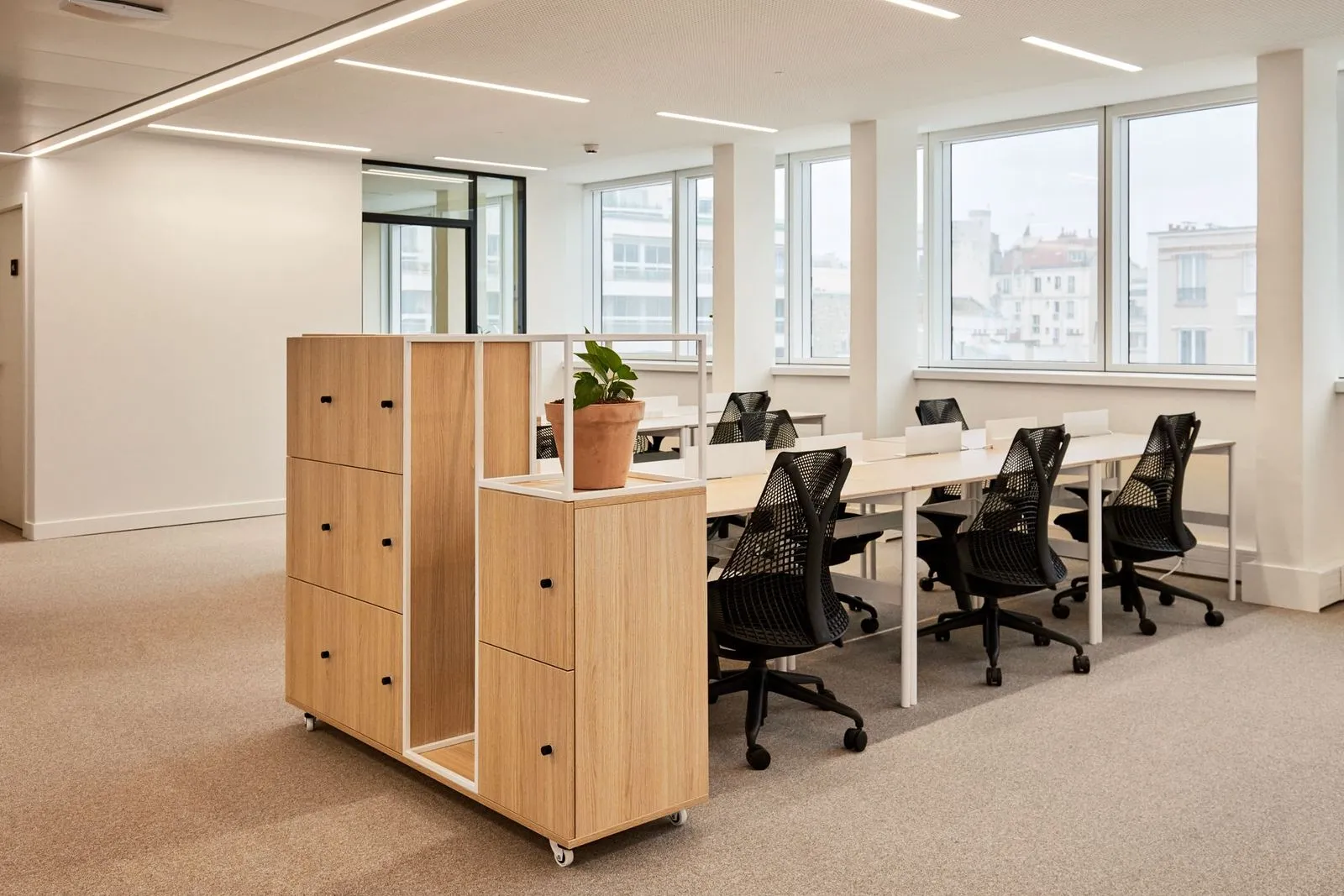
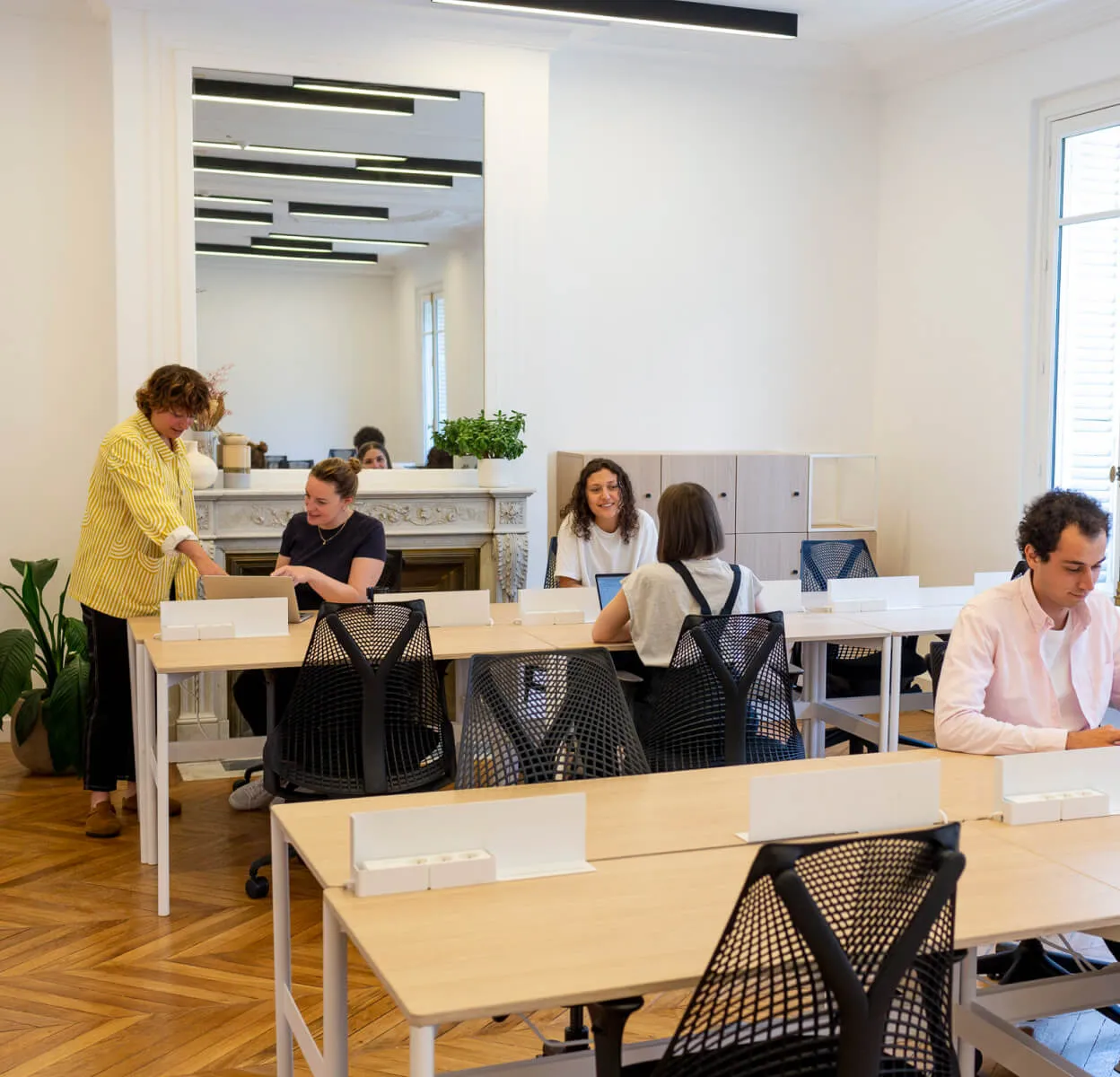
The advertised price almost always corresponds to a named desk in an open space, available during opening hours, furniture included. That base covers the internet connection, utilities, daily cleaning, access to a shared kitchen and a staffed reception. This is the perimeter to hold on to as a basis for comparison.
Around that base, the gaps open up on less visible lines:
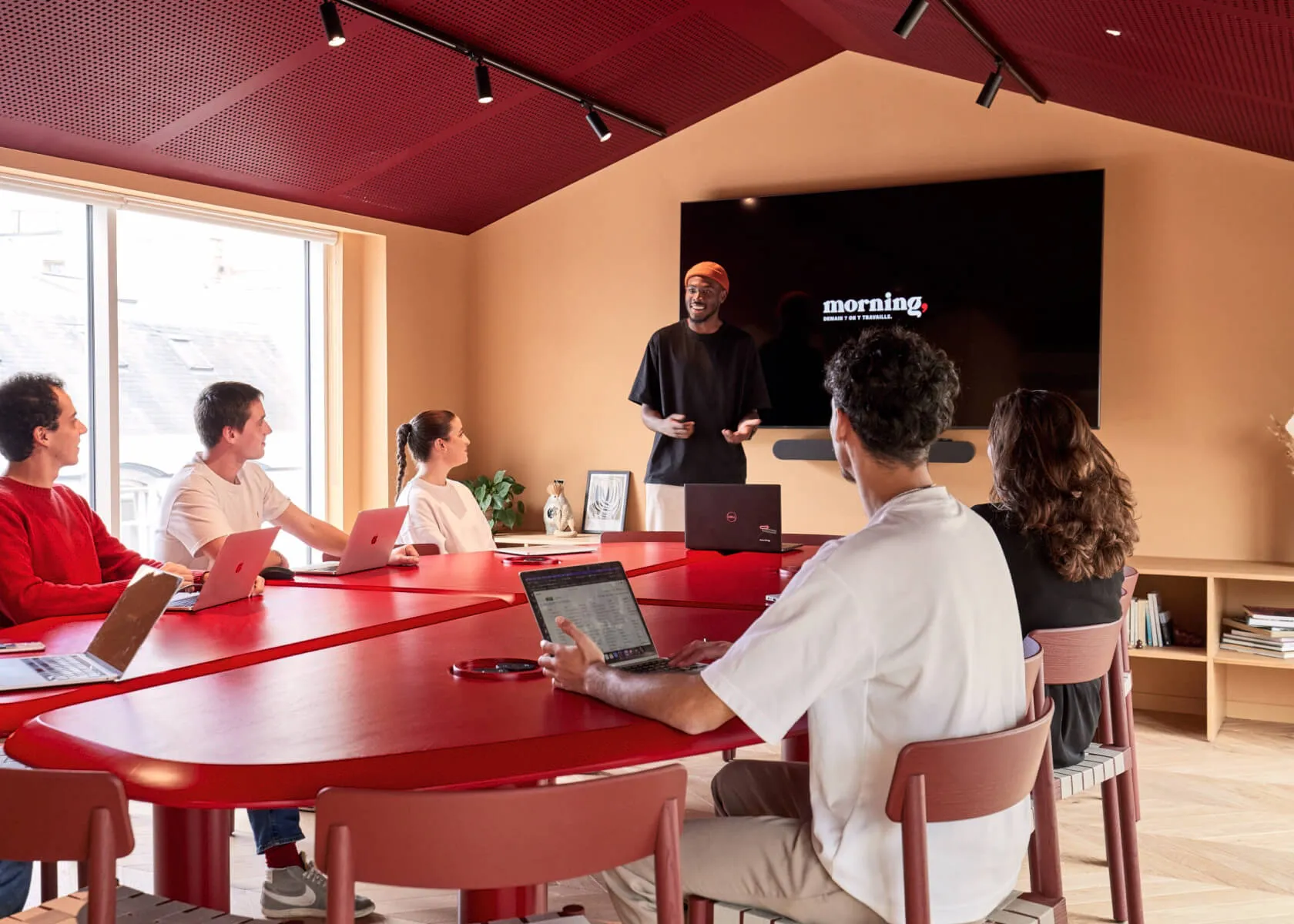
- meeting room hours, often capped by a monthly allowance before hourly billing kicks in;
- evening and weekend access, standard with some operators, optional with others;
- registering the company’s head office at the address, almost systematically an extra;
- storage, lockers and secure bike parking.
A rate at 380 EUR excl. VAT with no 24/7 access and no meeting room allowance can cost more in practice than an all-inclusive offer at 450 EUR excl. VAT. The right reflex is to rebuild a full monthly cost based on how the team will actually use the space.
Observed ranges by format
Three formats dominate the Paris market, each with its own pricing logic.
| Format | Indicative rate | Best suited to |
|---|---|---|
| Day pass | 15 to 40 EUR excl. VAT / day | Occasional use, mobile teams |
| Desk in an open space | 350 to 700 EUR excl. VAT / month | Freelancers, small teams |
| Closed private office | 550 to 900 EUR excl. VAT / desk / month | Established teams, confidentiality needs |
Indicative ranges observed on the Paris market, to be confirmed with each operator depending on the period and on availability.
The day pass remains the most flexible option, but quickly becomes more expensive than a membership beyond three days of attendance per week. The tipping point generally sits around ten to twelve days per month.
The private office, for its part, cannot be compared to a shared desk on price alone. It answers a different need, that of a closed and assigned space. The subject is covered in detail in our guide on choosing between a private office or open space .
Why the district matters so much
For an equivalent service, location explains most of the gap. Western Paris, from the 8th to the 17th including the 16th, concentrates the highest rates: proximity to head offices, dense public transport, a valued address. The north and east, starting with the 18th, 19th and 20th, remain markedly more accessible, with floor plates that are often more generous in surface per desk.
Between those two extremes, the central districts of the 2nd, 9th and 10th offer an interesting compromise: a legible address, excellent transport links, mid-range rates. This is also where supply is densest, and therefore where negotiation is easiest.
On a tight budget, shifting the search by one district almost always achieves more than a line-by-line negotiation. The real trade-off is not between two rates, it is between an address and a floor area.

The choice of district does not come down to the price per desk. Commute times for the team, proximity to clients and transport access matter just as much in the equation. That comparison is handled in detail in our article on where to locate your offices in Paris .
Three negotiation levers that work
A coworking operator’s price list is rarely set in stone. Three levers open real room for manoeuvre.
The length of the commitment. Moving from a rolling monthly contract to a twelve-month term routinely secures a meaningful discount, sometimes one or two months free. It is the most effective lever, provided headcount is reasonably predictable.
Volume. From five to ten desks, the conversation changes in nature. The operator starts reasoning in terms of floor occupancy and becomes far more willing to adjust the unit rate or bundle in services.
The entry date. A partly occupied floor, or moving in during a quiet period, mechanically improves the negotiating position. The opposite is true in September, when pressure on Paris supply peaks.
The hidden cost of flexibility
Flexibility has a price, and it makes sense: the operator carries the vacancy risk instead of the occupier. A monthly contract therefore costs more than an annual commitment, which in turn costs more than a conventional lease priced per square metre.
The right way to reason is to compare a total cost over three years, factoring in what a conventional lease really imposes: fit-out works, furniture, cabling, maintenance contracts, cleaning, insurance and internal management time. On that full perimeter, the gap narrows sharply, and coworking regains the advantage as soon as headcount starts moving.
That logic extends into internal organisation: a team alternating between the office and remote work does not need one desk per person. This is precisely the promise of the model described in our flex office guide , which allows the space to be sized on actual attendance rather than on theoretical headcount.
Building a useful comparison
To arbitrate seriously between two offers, four elements are enough:
- the full monthly cost per desk, including the options actually used;
- the entry cost, security deposit and set-up fee included;
- the exit conditions and the notice period;
- the ability of the space to absorb a change in headcount, upwards and downwards.
It is that last point that most often separates two offers that look similar. A slightly higher rate in a space able to open three extra desks within a month is worth more than saving 40 EUR per desk in a floor that is already full.