
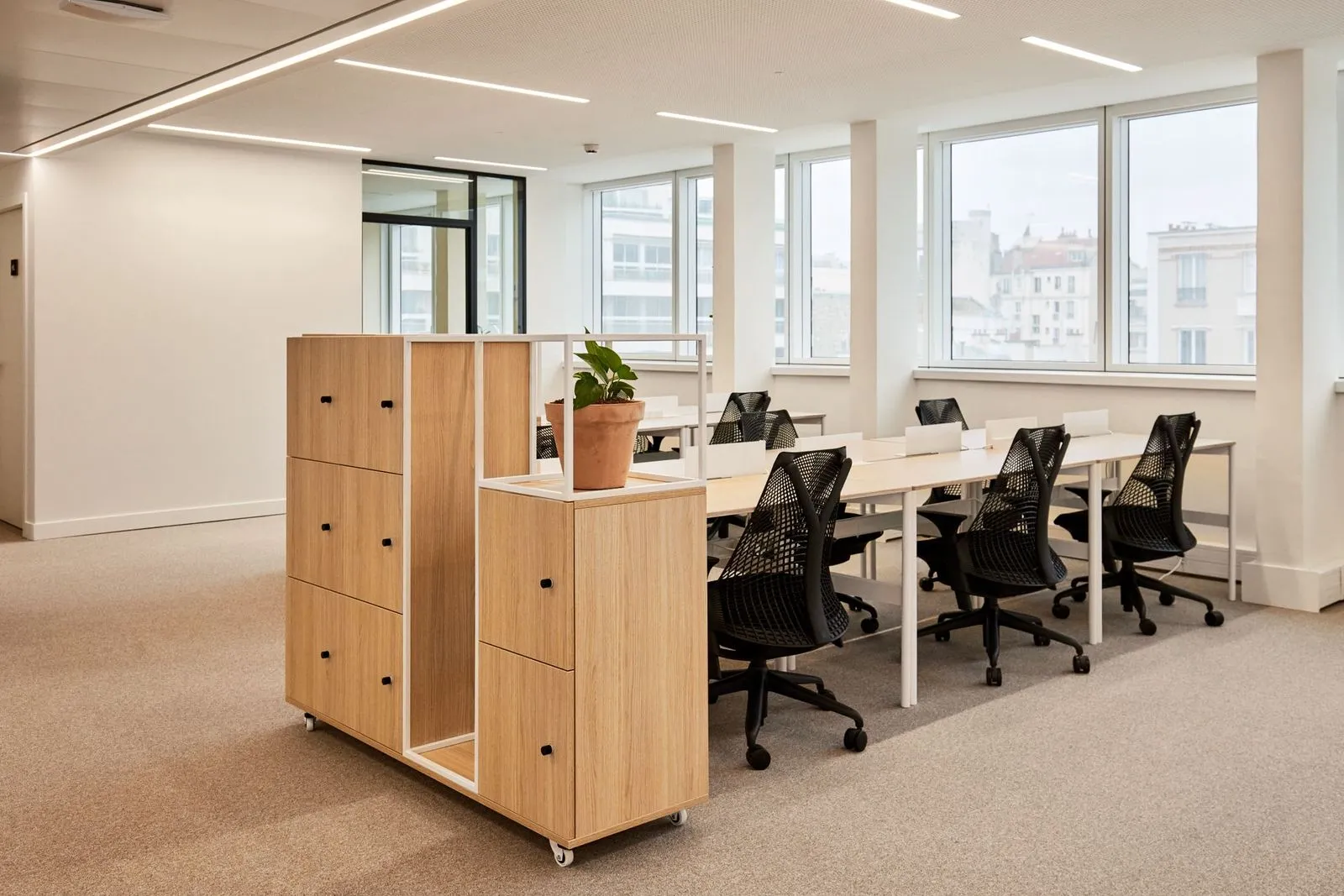
A business incubator hosts young companies during their first years of activity, offering office space at a reduced rate along with structured support. How it works, its admission conditions and its deliberately limited duration make it a step in a company’s journey rather than a permanent solution. This guide covers what it actually offers, who it suits, and the options to consider once the hosting period ends.
Incubator, accelerator, coworking or private offices: what’s the difference
Incubators, accelerators, coworking spaces and flexible private offices serve different needs depending on a company’s stage of development and budget.
| Solution | Typical duration | Company profile | Support | Indicative budget |
|---|---|---|---|---|
| Business incubator | 24 to 48 months | Young company under 3 years old | Strong: individual follow-up, training, networking | Reduced rent, increasing over time |
| Accelerator | 6 to 24 months | Project before or at the very start of incorporation | Very strong, focused on project development | Variable, sometimes in exchange for equity |
| Coworking | No commitment to a few months | Freelancers, small teams, growing companies | Limited, informal networking | Monthly subscription per desk |
| Flexible private offices | A few months to several years | Companies of any size, growing | Services included: reception, meeting rooms, connectivity | Budget per desk, no minimum duration required |
Durations and profiles observed across French structures, excluding schemes specific to a sector or local authority.
What is a business incubator
A business incubator is a hosting structure, most often run by a local authority, a chamber of commerce or a local economic development body, that rents office space at a reduced rate to young companies. The stated goal is to secure the first years of activity, when the failure rate is highest, by lowering fixed costs and giving access to a network of entrepreneurs and partners.
Admission is generally limited to companies under three years old, with a registered office in the structure’s local area, and a project that shows potential for growth and job creation there. Some incubators, particularly in large cities, specialize by sector, for example technology or manufacturing, which further narrows the profile of hosted companies.
What services does a business incubator include
Beyond the reduced rent, an incubator pools several services across the hosted companies: reception, shared secretarial support, a meeting room, printing and internet access. This pooling lets a company with just a few employees access facilities it could not yet afford on its own.
Networking with other companies in the incubator is another benefit frequently mentioned by hosted founders: sharing best practices, peer recommendations, and sometimes direct business collaborations between neighbouring companies in the same building.
What support do founders get in a business incubator
Individual support is what mainly sets an incubator apart from simply renting office space at a reduced rate. An advisor follows each hosted company, helps structure its development plan and points it toward the right contacts depending on its needs: accountant, lawyer, funding body.
Group training sessions complement this individual follow-up, covering cross-cutting topics such as management, sales or hiring. Introductions to financial partners, public or private, are also among the benefits founders look for when applying to an incubator rather than a simple registered office address . The intensity of this follow-up varies from one incubator to another, so comparing the advisor-to-company ratio is worth doing before applying.
How to join a business incubator
Joining an incubator follows an application process: a project presentation, a financial forecast and sometimes an interview before a selection committee. Criteria cover the company’s age, whether its registered office sits within the structure’s area, and the project’s growth potential.
Once admitted, the company signs a time-limited occupancy agreement, renewable up to a cap set by the incubator. Rent generally rises each year, gradually encouraging the company toward independence and freeing up space for a new project.
After the business incubator: office options to keep growing
The limited hosting period, between two and four years depending on the structure, means the next step needs to be planned ahead of the deadline. A company leaving an incubator has usually grown, and its budget and office needs have evolved accordingly: the question is no longer just private office or open space , but also how much commitment the team can accept while still in a growth phase.
A business centre offers equipped offices with services close to those of an incubator, with no duration limit or age condition. Morning ’s flexible private offices follow a similar logic: a budget per desk, with some plans offered without a minimum commitment depending on the offer (Morning states these terms on its offer pages), that adjusts as the team grows, across several Paris locations. For a team not yet ready to commit to a standard lease, office subletting or a flex office setup are also worth comparing before signing a long-term commercial lease.