
The term comes up in every office search without its actual content ever being clear. A business centre, often called a serviced office, is neither a conventional office building nor quite a coworking space, and the contract signed has nothing in common with a commercial lease. Here is exactly what the format covers, what it includes, what it costs and when it is the right call.
What a business centre actually is
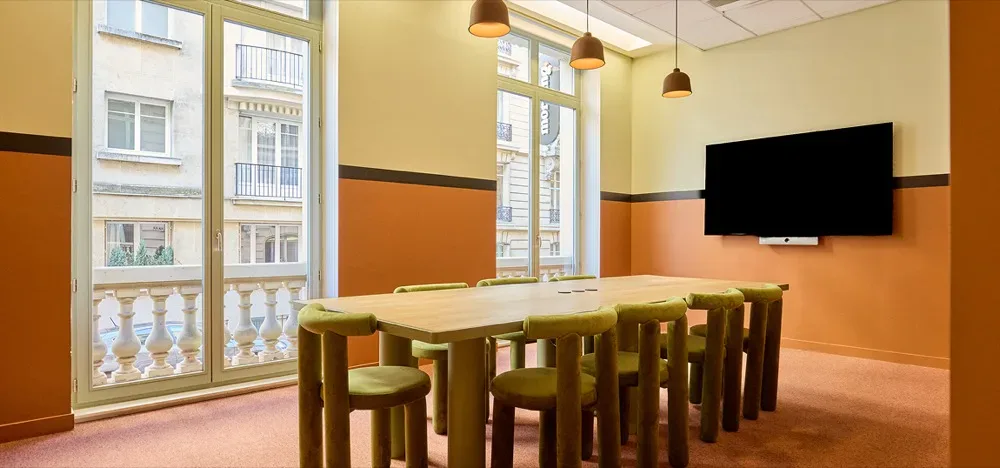
A business centre is a building or floor operated by a single provider that divides the surface into equipped offices and makes them available to third-party companies. The occupier is not buying bare square metres: they are buying a workstation or a closed office, already furnished, connected, maintained and backed by shared services.
The difference lies as much in the contract as in the fit-out. Where a commercial lease covers the enjoyment of premises and opens a right to renewal, occupying a business centre falls under a service contract. That contract creates no lease right, no commercial property protection and no goodwill over the premises. It is closer to a subscription than to a property rental.
This legal qualification explains most of the format’s advantages and limits. It allows short terms and reduced notice periods, with no deposit worth several months of rent and no key money. In exchange, the occupier loses the statutory protection enjoyed by a commercial tenant, notably the renewal right and the eviction indemnity.
Reference: French commercial code, articles L.145-1 and following on the commercial lease regime, https://www.legifrance.gouv.fr .
The services included in a business centre
Three services are found at practically every provider and form the backbone of the format.
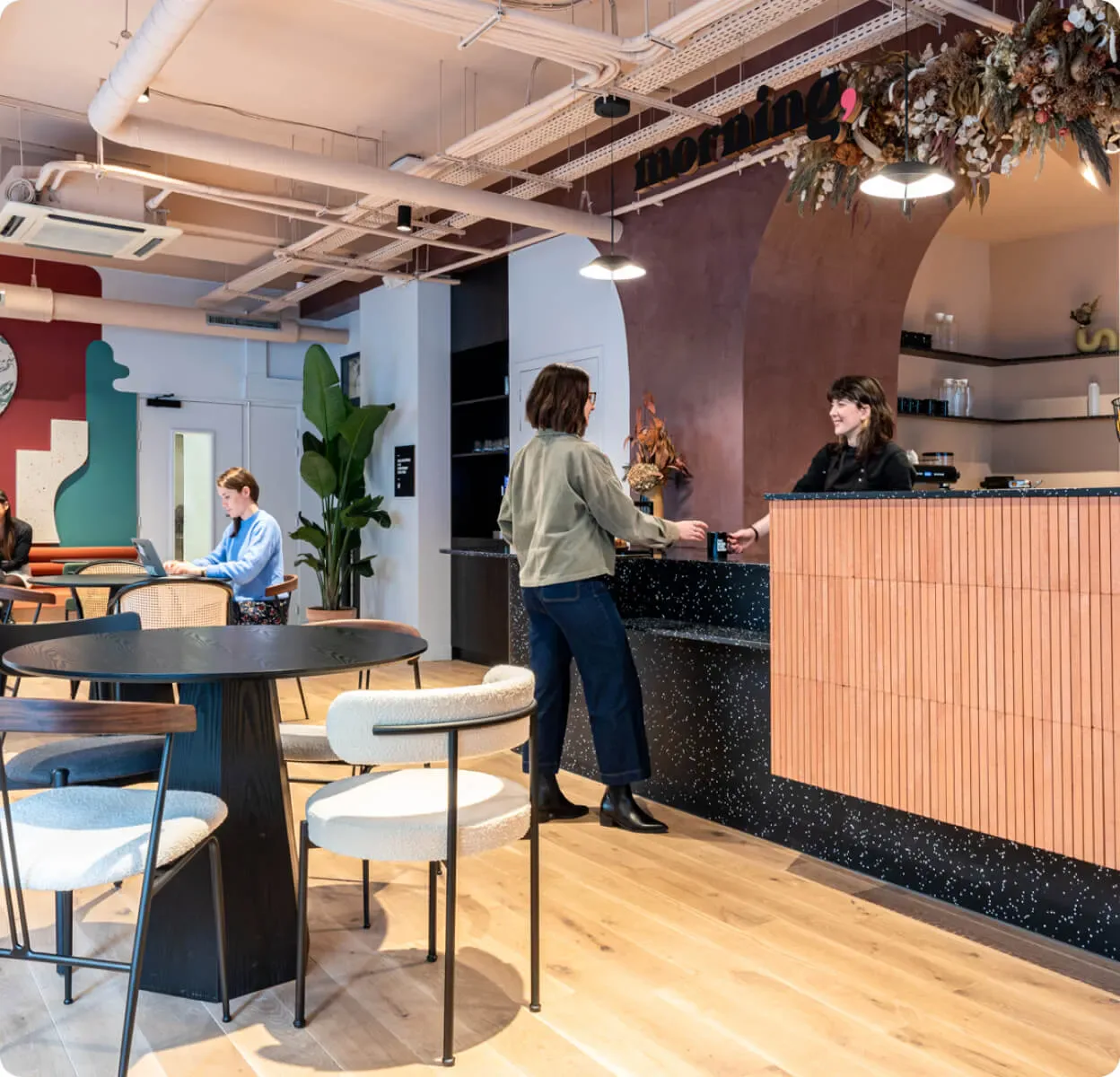
Staffed reception comes first. Someone greets visitors, directs them to rooms, takes in parcels and handles mail. This is what most clearly separates a business centre from a floor rented directly, where each company organises its own front-of-house logistics.
Meeting rooms come next, shared between all occupiers and booked on demand, often through a monthly hour credit included in the subscription. That pooling is the format’s main source of savings: a team of ten does not permanently tie up a twelve-seat room it uses four hours a week. Sizing and equipment criteria are covered in the guide to meeting room design .
Registered address hosting closes the backbone: the centre hosts the company’s head office address, provided it holds the required licence.
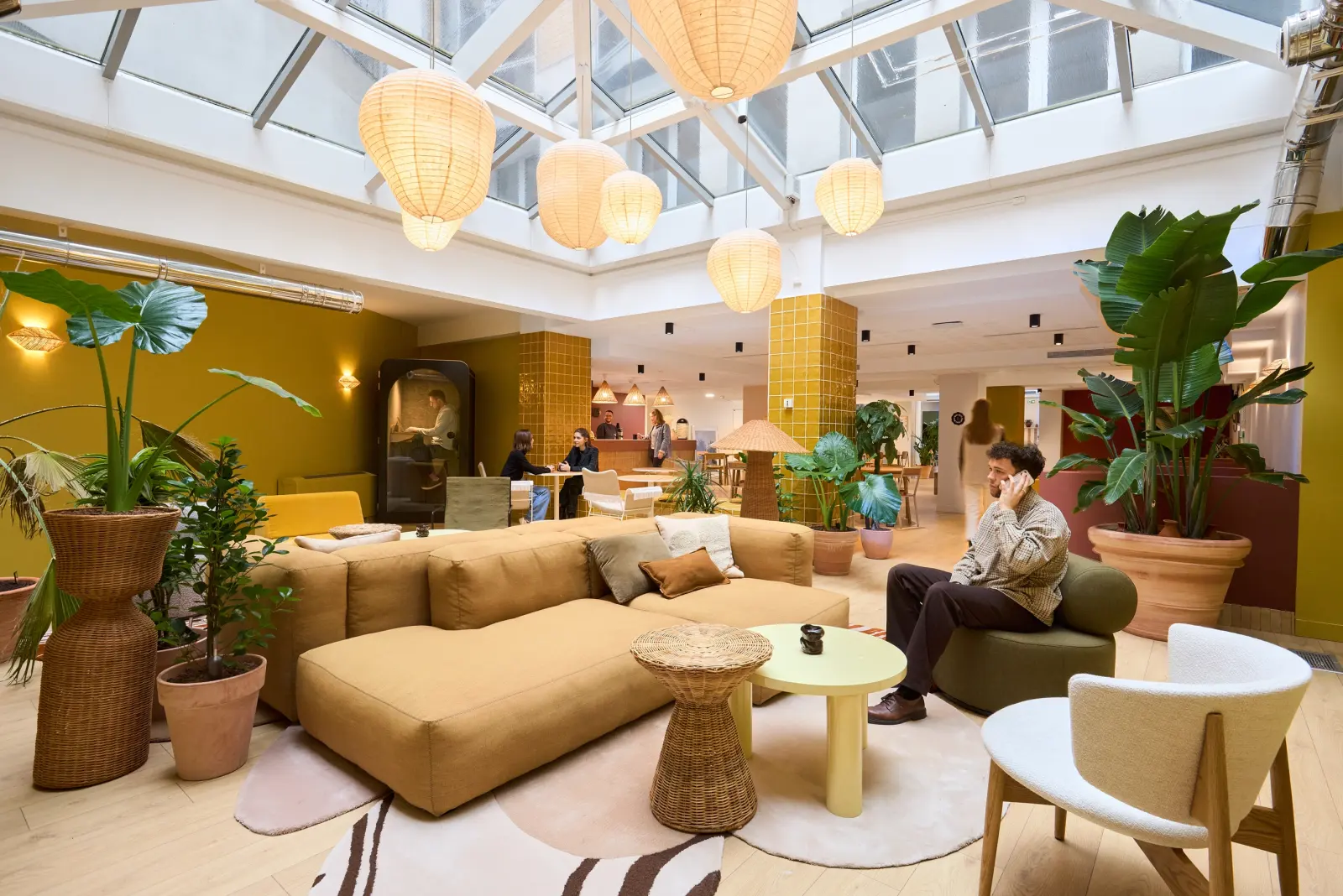
Around these three pillars sit services that vary by brand: access to common areas and kitchen, printing, daily cleaning, high-speed connectivity on a dedicated network, mail handling and sometimes concierge, gym or catering. All of it is in principle covered by the headline price, which is the format’s second structural argument.
Business centre, coworking or 3/6/9 lease: the real differences
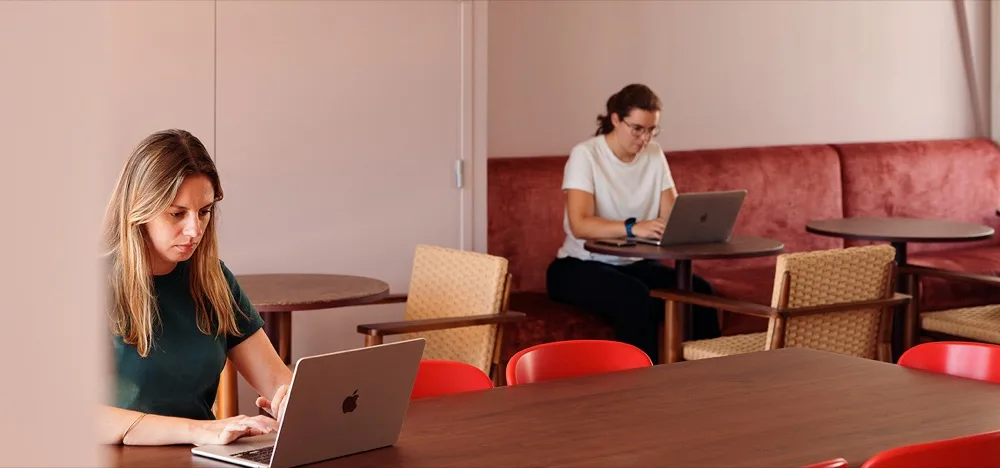
The most common confusion sets business centres against coworking. It has lost much of its relevance: most providers now run both configurations in the same building, with open-plan desks on one side and closed offices on the other.
The useful comparison is about occupancy mode and commitment.
| Criterion | Business centre | Coworking | 3/6/9 commercial lease |
|---|---|---|---|
| Contract type | Service contract | Service contract | Commercial lease |
| Usual commitment | Monthly to annual | Daily to monthly | 9 years, exit every 3 |
| Typical space | Closed office, sometimes shared desk | Open-plan desk | Bare floor |
| Fit-out and furniture | Included | Included | Tenant’s responsibility |
| Charges and services | Included in the rate | Included in the rate | Rebilled on top |
| Renewal right | No | No | Yes |
| Budget entry point | Desk or closed office | Day pass | Deposit and fit-out works |
The 3/6/9 lease remains the cheapest format per square metre over a long, stable occupancy. It does, however, require funding the fit-out, furniture, insurance and running costs, and accepting a nine-year commitment terminable every three years. The benefits of coworking and its own limits are covered in a dedicated guide to coworking benefits , and the choice between shared desk and closed office in the article on private office versus open space .
Reference: French commercial code, article L.145-4 on lease duration and the three-yearly right to give notice.
How much a business centre costs
The rate is worked out per desk per month, all-inclusive, not per square metre. That is the first adjustment to make when coming from a conventional property search.
Ranges observed in Paris are as follows.
| Configuration | Observed range | Profile concerned |
|---|---|---|
| Registered address only | 35 to 79 € excl. VAT / month | Head office with no workstation |
| Desk in shared space | 350 to 700 € excl. VAT / month | Freelancers, small teams |
| Private closed office | 550 to 900 € excl. VAT / desk / month | Established teams, confidentiality |
Three variables explain most of the spread. The district first, with a marked gap between the western Paris business quarters and the north or east of the city. The length of commitment next: moving from a monthly contract to a twelve-month term generally brings the rate down noticeably. The service level last, since a generous meeting-room credit and 24/7 access are not priced the same way as an office-hours offer.
The habit that avoids unpleasant surprises is to rebuild a full monthly cost from actual usage rather than compare headline rates. An offer at 380 € excl. VAT with no meeting credit can cost more in practice than a genuinely all-inclusive offer at 450 €. The comparison method is set out in the analysis of coworking prices in Paris , and transposes directly to business centres.
Registered address hosting in a business centre
This is the service that tips many decisions towards the format, sometimes with no workstation attached at all.
Hosting a head office is not an unregulated service in France. The operator must hold a prefectoral licence to carry out domiciliation activity, provide premises with a room fit to ensure confidentiality and the keeping of records, and conclude a written contract for a minimum renewable term of three months. The certificate issued conditions the filing of the registration application.
Two checks are worth making before signing. The first concerns the licence itself, which can and should be requested. The second concerns the number of companies already registered at the address: a saturated address loses part of its image value and draws attention during certain banking procedures. The four available routes and their respective costs are compared in the guide to a company registered address in Paris .
When a business centre is the right choice
The format proves relevant in four specific situations.
A company launch first, as long as future headcount stays uncertain. A short commitment avoids locking in floor space for nine years when the team may double or shrink within twelve months.
A new market entry next, whether a foreign company opening in France or a regional business testing Paris. A business centre provides an immediately operational address without tying up cash in a fit-out.
A temporary need last: an activity peak, a project team, works in the main premises, or a transition between two leases. The format absorbs these swings without heavy negotiation.
A team of fewer than thirty people in steady state, finally, for which the full cost of a bare floor, once fit-out, furniture, running costs and management time are included, often exceeds the all-inclusive rate. The tipping point then shifts with size.
Conversely, the format loses its appeal for a stable company of more than fifty people, with specific fit-out needs or a brand identity to express in its own walls. The location question then arises differently, as set out in the article on where to locate offices in Paris . Spaces of this type are presented on the Morning offices pages .
What to check before signing
Five clauses deserve close reading, because they concentrate the gap between the headline rate and the real cost.
- the notice period and how it must be served, ranging from one to three months depending on the provider;
- the exact scope of all-inclusive, item by item: meeting-room credit, printing, out-of-hours access, guests;
- the price revision clause, its frequency and its reference index;
- the expansion capacity on site, meaning the ability to open extra desks without renegotiating everything;
- the hand-back conditions and the inventory of fixtures, including for an office delivered furnished.
The fourth point is the most often overlooked and the most expensive. A slightly dearer contract in a centre able to absorb three extra desks within a month is worth more than saving a few tens of euros per desk in a saturated building that will force a full relocation at the first hire.